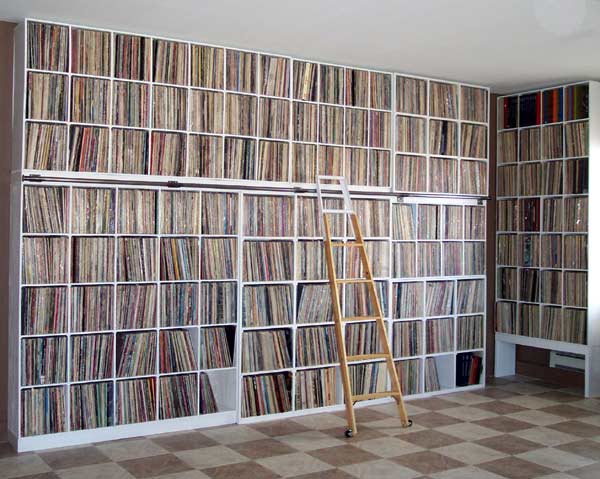
Showing posts with label Vinyl. Show all posts

Friday, August 18, 2017

For The Record


There are a lot anti-vinyl sentiments being scattered around the the web these days. From the concept that record collectors are doing nothing more than collecting a tsunami of toxic waste to the reports that the record industry has one foot in the grave; I am here to set the record straight on these two topics and toss my opinion in regarding a few bits of mis-information being thrown around.

1. The Record Industry Is In Decline.

And no I won't provide a link to the WSJ article as it is simply a fabrication from start to finish, used to feed a slanted narrative to generate ad revenue from clicks.

But, I will say that if you believed the WSJ article, you would be believing a series manufactured statistics, taken out of context, that indicated a "small dip" in vinyl sales spells the end of the world for the record industry. Much in the same the phrase "Blood is thicker than water." is today taken to mean family is more important than friends. When in reality, the context of the original phrase was "The blood of the covenant is thicker than the water of the womb." which is a reference to the bond of soldiers shedding blood together being more important and stronger than the bonds of families.

The fact is, the record industry is healthy and growing.

All industries experience swings, both up and down, in sales; from automobiles to food to diapers. The WSJ did not report that there was lack of growth in sales, but rather that the growth in 2016 had not been as high as it was the previous years and that this decline in growth was cause for us to throw in the towel.

It a commonly observed and respected that in any given industry, healthy growth is considered to be between 2% and 3% year to year. There is a boom of growth in any industry's growth as adoption is high, meaning consumers are clamoring for the product and this typically happens with new products showing a 10% or more growth during this boom. Vinyl sales experienced that as the number of millennials discovered vinyl and older generations found the love of the medium again. Depending on the size of the industry, this number can, of course, fluctuate, but a mature, large industry growth at a rate of 2% to 3% is considered good, especially in an industry as old as music. So 12% growth is far from the "death of vinyl' as the WSJ article would like you to think.

Now I did write a post a few weeks back regarding the possibility of the vinyl bubble bursting, but my post had more do with over-saturation in the manufacturing industry, repressings and the impact this could have in arena of used record sales (which sales numbers are not tracked). What my post did not analyze was market reports. It was focused on manufacturing saturation.

The fact remains: Records sales were still reporting 12% growth in 2016; way above the average for an industry of this size and maturity. This is considered in good health. Sony recently announced they were reopening their record pressing plants in Japan because of the success of records in the marketplace. Sony may screw a lot of things up, but Sony doesn't usually make a decision like this if the market is on a downward slide. There is a great retort to the WSJ article by the guy named Daniel Sanchez. I would suggest you check it out.

2. Your Record Collection Is Bad For The Environment

Well this is both true and false, but I am here to set the record straight on this subject.

It is cool today to shame anything that is popular. Be it body-shaming, salary-shaming or green-shaming. If it s popular, it appears to be shame worthy. Hell, I am openly opinion-shaming in this article and even admitted it, but at least I am admitting it.

The general nature of the current debate is that records are worse for the environment than digital or CD formats. This is being widely spread online. From articles claiming the environmental impacts being devastating to an essay from an artist claiming he would never release another album on vinyl because of the impact of the environment.

The environmental hysterics all stem from one little toxic compound...

Polyvinyl chloride, PVC, which is the material most records are made from, is a plastic compound that requires a stabilizer like barium, zinc and calcium carboxylates (and until recently, Lead). PVC is commonly regarded as the most toxic of the plastics in the family of plastics because one of the main ingredients; vinyl chloride as it is a known human carcinogen (cancer causing agent).

But what you may not hear in these doomsday articles is that PVC is also commonly found in the following products;  Pipes (including pipes delivering drinking water, approved in 2007 by California), electrical cables, siding for houses, decals, automobiles, clothing (Goth, Punk, fetish and other alternative fashion wear) as well as waterproof sportswear (ski gear, shoes, aprons and handbags), flooring materials and even in our healthcare (tubing used for blood work, catheters, heart-lung bypass sets, hemodialysis and even as an alternative to latex gloves)... and so much more... like greenhouses, home playgrounds, foam and other toys (action and inaction figures), custom truck toppers (tarpaulins), ceiling tiles... the list literally goes on and on and on.

Our lives are basically surrounded with PVC. So records are no worse for you than eating a burger, potato salad and chips off a reusable plastic plate at a BBQ, or reheating your lunch contained in a PVC plastic container in the microwave. Seriously.

But what many of these anti-vinyl stories aren't telling you is that the chemicals used in making your phone, MP3 player or other digital music device aren't any less toxic. Most electronics made today contain some, if not all of the following ingredients, or use them during the manufacturing process; Berylium, Cadmium, Chromium Hexavalent, Lead, Mercury, Brominated Flame Retardants (BFRs), and yes, even polyvinyl chloride (PVC).

And if you use a device that has a rechargeable battery, well let me tell you something about these things. Lithium batteries contain electrolytes called super-halogens, and majority of these super-halogens also happen to be toxic halogens. Oh and while we are on the topic of super-halogens, breathing some toxic super-halogens gases at a concentration of 0.1% for several minutes is actually lethal.

And the reality is, lithium-ion battery technology is not safe. Short circuits, overcharging, over-discharging, crushing, and high temperatures can lead to what is known as a thermal runaway; a fire that leads to an explosion. Even if your battery doesn't experience thermal runaway, one study found that Lithium batteries when heated up, during normal use of a device, leaked more than 100 toxic gases including carbon monoxide.

Have you ever heard of a record leaking toxic gases during normal use? Better yet, have you ever heard of a record experiencing thermal runaway? I mean Van Halen's 1984 was hot and all, but it never spontaneously burst into flames and exploded on me during playback. Has a record ever released a gas so toxic that exposure to even the smallest concentration of it for a mere few minutes could prove lethal?

And CDs aren't much better in the plastics toxicity arena. CDs are... plastic. Duh Dun Duuuuun. Their cases are... you guessed it, plastic. All plastics come from petroleum. Guess what petroleum is; toxic.

Another argument is that records weigh more than CDs and therefore use more fuel in the shipping process. You know what weighs as much or more than records that gets shipped? Cars, turkeys, hams, canned foods, frozen vegetables, Cards Against Humanity.

There is no perfectly green solution when it comes living. The worst thing to happen to this planet is humans. Sorry... that just happens to be a true statement.

And yes, the making of music has an environmental impact. Hell the music making process is filled with plastics; instruments have plastics, including PVC. Amps, tuners, guitar picks, mixing boards, microphones, cables, speakers... all have toxic materials used in their manufacturing process. A tree or two are cut down to make a single guitar. A baby llama is scarified every time Justin Beiber releases a new album. Just so we have full disclosure, the llama/Beiber reference was just a joke.

My point is, humans can't get away from having an environmental impact. And while I am not condoning the slash-burning millions of acres of rain forest, you know because I recycle, I am asking you to not let the uninformed chicken littles of the world tell you the sky is falling just because they have their own trend they're following. Be responsible, but enjoy life as much as you can, because life is too short to not enjoy it.

In Conclusion
Let's face it folks, nothing in this world is worse for the environment than humans.

But records are no more dangerous to us or the environment than CDs, digital music players or anything else for that matter. Yes there are risks. Yes, there are costs, but these can be and are being mitigated through the most modern green manufacturing processes. And as we learn more, the manufacturing processes get greener and safer every year.

I would argue that a good record collector, one that looks for a used pressing instead of buying a newly pressed reissue, which keeps the old pressing out of the landfills, is probably more environmentally friendly than the person that buys a digital music player/streamer that has to be disposed of after two years because the lithium battery doesn't hold a charge anymore and isn't replaceable by the consumer; that's right Apple I am calling you out for that starting that money grabbing trend called disposable consumer electronics.

See, just I just apple-shamed.

My turntable has been around since 1973 and it still works great. Show me any digital player (iPhone, iPod, Zune, Galaxy or other device) that can even come close to experiencing that much longevity; 44 years. Show me a CD that was made in the mid to late 80s that is still playable. I have a record that was pressed in 1923 that plays like it was new. When compared to the two to three year life span of a cellphone, or Black Friday television, old music formats and vintage electronics used to play them far better on the environment than anything made today.

Furthermore the record industry remains in good health; for the time being. If you're gonna have a heart attack every time you look at record sales numbers, I strongly recommend you don't ever track your weight or the stock market on a weekly basis, let along daily; the ups and downs on those measures would likely cause you the clutch your chest and fall over.

My advice, stop letting the fear mongering media scare you away from your passion. Quit clicking on the links that are obviously click-bait titles. I'm not saying that the toxic components used the manufacturing process of records haven't caused harm in this world, there is plenty of evidence that would contradict any claim like that. What I am saying though is that records have been relatively safe and around for longer than any of us have been alive; and I'm old, so that's saying a lot. And more importantly, records will likely remain around for decades to come and they will only become safer to manufacture in the future.

Monday, August 7, 2017

I Want It All, I Want It All, I Want It All, And I Want It Now


The mental health status of this collector... yeah that's the subtitle. This is a self analysis essay.

With the exception of my mom, who lives in a house that feels like a cross between a Class 10000 clean room and a museum, most of every single human being on the planet, are hoarders to some degree.

And you know what, it's okay. You're a hoarder. He's a hoarder. She's a hoarder. It is normal. Just because you keep some stuff, it doesn't mean you're going live on a property that looks like the one above or that you are going to be on a future episode of an exploitative television show.

There will be no judgments cast here, we are of the same ilk.

And yes, there a difference between a hoarder and a collector, but it may be difficult to see the differences at times, especially when you look at the psychology of collecting and hoarding; the line becomes very blurred, a true neutral gray region. And while I'm not a psychologist, I can share some basic definitions I use.

A collector is someone who collects things of a specific type or theme. Comic books, records, movies, plates, glassware, antiques, vintage cars; we all have our reason's or as I like to call it, passions for collecting these things. But typically a collector collects one, two or maybe three of these types of things.

A hoarder is someone who has a hard time letting go of things; with a deep neurological need to "save" them. Usually, but not always, these things a hoarder "saves" can have very little real world value (read garbage); but again not always, as the value of many things hoarders "save" could be shockingly high.

This means that a collector that "collects" more than one specific type of thing, could, technically speaking, be a clinical hoarder, especially if the "collecting" is impulsive.
 
Some record collectors are known as completion-ists. Completion-ists can be mild; must have all the songs from their senior year of high school, as an example. Or, Completion-ists can be extreme; must have every version of every record from a certain musician/band (including imports from various countries). Even though we, as record collectors, all have some form of completion-ist in us, the person who needs every version (imports, misprints, reissues, etc) of every album may be a step closer to being classified as a hoarder.

For me, I will give Van Halen as my personal example. I needed to have all of the Van Halen records in my collection, but that did not include the Van Hagar era starting with 5150 (I have taste, though you may think it is poor taste, we won't get into that argument here, as poor taste is still taste.)

So let's talk a little bit about records as a type of thing to collect versus hoard. You are a collector if you collect music you like and listen to. You might be a hoarder if your "collection" contains music that you don't like or music you have never and will never listened to.

For me in this instance, if my collection had one or more Van Hagar albums, it would be likely that my collection would contain albums I didn't like from other bands I otherwise liked, or even albums I didn't like from bands that I didn't like.

This alone could check off one the markers identifying me as a hoarder.

And this scenario can get really exaggerated. I know of people, ahem, a "friend", who takes car loads of records home with them regularly. I actually wrote a posting back in February, that talks a little bit about one man's obsession that led him to buy enough records over a 20+ year period to fill a single-car storage unit, front to back, top to bottom, with boxes and boxes and boxes of records. I don't know what his motivation was during that time, all I know is that I gained access to so much vinyl that I didn't know where to begin.

Record collectors, and collectors in general, tend to have mild versions of ICD. Not all collectors have ICD, Impulse Control Disorder, is very common in people with ADHD, but many collectors do suffer from it. ICD is characterized by a failure to resist a temptation, urge or impulse that may harm oneself or others.

Addicts of all types tend to have ICD; drugs, alcohol, sex, shoppers (shop-aholics), porn or Facebook. Addictions are two parts, a need to "feel good" or more than likely, the need to not "feel bad" and an inability to resist temptation when the opportunity to not feel bad presents itself.

When ICD becomes a problem for collectors is when we purchase or otherwise acquire records you don't have room for or don't have money to spend on... e.g. buying a new record or batch of records with your grocery money. If you are spending your grocery money on vinyl, you would be failing to resist a temptation, an urge or an impulse even if it may harm oneself or others.

And the funniest thing about ICD, it is often accompanied with feelings of guilt and remorse. So once you make the decision, you will feel guilty about it or regret that you did it. In the world of collectors, just as it is with addicts; remorse and guilt can lead to hiding purchases or having hiding places to conceal just how big your collection/problem is.

So, in my mind, my Van Halen collection was complete when I purchased Van Halen, Van Halen II, Women and Children First, Fair Warning, Diver Down and 1984. I didn't care if they were original pressing or reissues, I just needed them in my collection. When I saw one, and it was in my budget (meaning I could find a way to justify buying it when I saw it; and I always found that justification, even if I didn't have the spare cash to do so), I purchased it, usually making a small sacrifice in some other financial area of my life; some times this was accompanied with remorse, but rarely with guilt.

But once my Van Halen collection was complete, my record collection remained incomplete. So... I moved on to another; for me it was Led Zeppelin and then on to Red Hot Chili Peppers.

I realize that earlier I wrote that this posting was to be free from judgment, and it still is, I am not here to judge anyone for any mental health issues they may have, but I am using this image (right) of Henry Rollins to express my judgment of people who allow their collections to be damaged. I just don't understand that mentality.

If you collect something, you typically have a love of the thing you are collecting.

Regardless if it is comics, records, mugs, beanie babies, dashboard hula girls or bottle caps; if you aren't taking care of the collection, it shows a disconnect, a lack of love for the objects being collected; and that is not who a collector is at their core, typically.

This is a key sign of trouble as a collector; if you don't have room for the things you are bringing home and these things stack up, are disorganized and sometimes it gets to the point that things are getting damaged as a result. If your collection is causing problems with your marriage, relationship and/or finances, you may need to take some to evaluate some your priorities.

My ex-wife, along with so many other undesirable traits, was a hoarder/shop-aholic and remains one to this day. As an example of her hoarding, we would park $35,000 worth of cars in the driveway because she had so many things in the garage, floor to ceiling, things that were never-ever-ever used, we could barely walk around the garage, let alone park one or both of our cars in there. So she would literally put $35,000 worth of automobiles at risk of break in or outright theft to store things that were not used, ever and probably weren't worth five hundred dollars.

Whenever I attempted to talk to her about getting rid of much of the stuff, she would recite the emotional value of the items; "This was my grandpa's homemade shelf," or "We can't get rid of that, it was given to me by 'so-in-so'" or "priceless family heirloom. We would have "garage" sales once a year, that actually took place in our drive way, because our garage was still so full of junk.

Each sale would be full of brand new kids clothes, most of which still had the department store price tags on them. We would sell the clothes for twenty-five cents each, or five for a dollar. And each year we made nearly $1000 at our garage sales. That should give you a sense of the true scale of the issue.

Then after the divorce her hoarding got worse. She now has two single car garage sized storage units, across town from one another, in addition to her single car garage, all of which is filled to the brim.

And again, I am not throwing stones here. I have my things I hoard. I have two boxes filled with cables; chargers for old phones, power cords for computers, audio cables, coaxial cables, CAT-5 cables, speaker wire... and so on. It is something I can't let go of, but then again, my cable boxes are accessed multiple times a month to complete various projects I am working on.

Now I am not saying that if each and every little thing isn't in its rightful place, you are hoarder. I too have periods of acquisition where I come into a large quantity of stuff that I have to make room for. Like the time I was gifted over a thousand albums, which I culled down to three hundred albums.

Even after the culling, I was not prepared for an influx of three hundred albums into my collection. I didn't have storage, nor did have money to buy storage at that given moment. But again I didn't go out and buy three hundred albums. I couldn't say no to the opportunity.

But rather than store them in my garage for years on end, I culled the thousand albums down to three hundred must keeps and made a plan to expand my storage to accommodate the fact that I just tripled my album collection. The other seven hundred records, well I gave them all away.

And within a month, my plan was executed and my albums were all safely stored away in their permanent place in my home.

I never want my collection(s) to take over my life. I simply to enjoy the simple pleasures I find in this little insignificant life I have been blessed with. When will my collecting be done, probably the same time I retire from working; when I'm dead.

In conclusion, don't take anything I wrote here personal. This, as much of writing is, is more of an essay to myself; putting my own life in perspective. When you (read this as first person narrative as I am talking to you the reader at this time) read the word you, I am generally talking to myself in second person narrative. Nothing more.

Being a collector with a mental health condition like ICD or a tendency for hoarding can be a real challenge, especially from an outsiders perspective. While my wife asks from time to time, "So when is your record collection going to be complete?" My wife understands that my love of music runs deep and is very broad. But my wife is truly my reality check, for without my wife, I would likely have my garage filled with records, electronics, hulks and comics and would be very unhappy about all the clutter as I am minimalist regarding the world around me. But the minimalist in me can't suppress the fact that, deep down inside, I want it all, and I want it now.

Friday, July 28, 2017

Why all the hate?


I love music and love sharing music with others. I especially love music when it is spinning at thirty-three and one third revolutions per minute. I love the sound. I love the ritual. I love the experience.

And finding others who share that love is amazing.

But, do you ever find yourself feeling down, disengaged or even angry while engaging with social media to connect with others over that love? Have you lost interest in the things that you once had passion for? I experience these things from time to time... and I have a good idea why.

I am the type of individual who prefers to share my love of something rather than my hate of things. At 47 years old, I find there isn't enough time or energy in this life to spend any amount of it on hate. Hating something is like burning down your own home because you saw a rat.

Hate is such a waste of energy.

See I define hate as the dictionary does; intense hostility and aversion usually deriving from fear, anger, or sense of injury. There is very few things in life that evoke hostility and aversion for me and music definitely isn't one of those things.

I love music. It is that simple.

I love almost all music. Some music I love more, some less. The music I don't love, I also don't hate. At no time has a band or their music done or said anything to spurn hostility and aversion in me. They haven't made false claims about me, they haven't robbed me, killed my wife or kids, slashed my tires or even dropped a deuce in my yard.

So why would I hate them or their music? And from my view of the world, how could any rational person truly "hate" any music, musician or band?

As I surf the perceptually endless sea of opinions on social media, I find more and more hypocrisy in the world of twitter and the plethora of "fan" pages on Facebook. People and groups of people that claim to be "fans", and "lovers" of things like music, comics, movies, sports... just about anything that a fandom can be based on, are more focused on the negative aspects of their passion than on their love of something.

It's almost like it's trendy or cool to be a hater.

Random Post on a "Fan" Page
It is very common to see a group on Facebook that has a description that states; "... a group for music lovers...", yet much of the content in the group will include postings and comments that resemble this image of an actual post in a Musuc "Lovers" group on the left. It's not just random posts like the one on the left; there are some nasty, hateful comments to otherwise positive posts.

I can understand someone not liking a particular band, or not liking the personal habits of a particular member of a band, but to take the time it takes and spend the energy it takes to spread this hate is something I don't understand at all. A fan page, by definition, is supposed to be about the things you love. So if this is a fan page, why post hate or allow hate to be posted?

I don't get it.

But it is more than just posts and comments, some people carry their hate much further, going so far as to make social media accounts and groups dedicated to what they hate and they actually draw other like minded people in, like this person in a  Facebook group titled, " I hate the Red Hot Chili Peppers because they just Suck!"

Negativity Attracts Negativity

Now, this writing isn't just about all the negativity out there. I am here to share my strategy for dealing with the hate or more importantly, eliminating the hate.

Please, don't get me wrong, I am not some Dudley-Do-Right-Polyanna of person who only sees the silver lining in the world. I am a human being. But when it comes to my interactions with the world around me, I want to spread light. I want people, either in real life or via social media to leave an interaction with me feeling good about the interaction, and typically I want to leave feeling the same way, because what's the point of living in a negative space.

So how do I do it? How do I avoid the negativity it in the world of social media. Well, to be honest, I don't.

First and foremost... you can't avoid all the negativity on social media. It is that simple. If you are on social media, you can't avoid the negativity altogether, but you can minimize it by choosing to limit your exposure to it and you can choose how you deal with it.

My first hard and fast rule is to not engage with the negativity. I firmly believe the best way to let go of something that is not good for you is to just simply stop participating in its energy altogether. This can be difficult, because the act of denying or defending something actually affirms it because the act itself puts energy into it.

So when I come across a negative post or comment, I do not respond. I won't even put a positive response because any response, even a positive response is putting energy into the negativity.

The saying, "Don't Feed The Troll", while funny, it is also true is actually a pretty good rule to abide by.

One of my key strategies is I limit my contacts in the world of social media to people I have relationships with in real life; people I share common interests with and actually hang out with; again in real life. This doesn't mean I only hang out with people that all see the world through the same lens I do. I am not a lemming. My friends constantly challenge my view of the world, but they are not negative people.

I have friends who are into photography, some friends that are into comics, some that are into horror movies and some that are into collecting records. Hell, some are even into all of the above, but in total, I have a whopping 62 friends on Facebook.

And, I am a happier person for it.

This has been a difficult strategy to apply at times. As a person who has helped run state fair photography competition, managed a huge photography club, taught photography classes, hosted a weekly podcast about geek culture, had booths at comic cons, interviewed celebrities and (even made friends with some of them) and the various other world opening adventures, it is not a stretch of the truth to say that I have had thousands of friend requests across social media, most of which were complete strangers to me.

But, the key has been to decline all but 0.00000001% of them.

See just because I went to the same high school as someone, or attended the same comic con as someone or because they listened to me on the radio once or just because we both love the Popeye Movie Soundtrack doesn't grant them instant access to my life. Hell, I have been working with the same people for the last three years and I have not had any of my co-workers over for dinner. My co-workers aren't even friends on social media. So why would allow a complete stranger or even a casual acquaintance that level of access to my life?

This is just one way I keep the riff-raff out.

Another key element of my strategy is to investigate before I engage. When I join a new group, I read the postings and the comments to the postings in a group before I make any post beyond my obligatory "Thanks for the add" post.

I am looking at the general atmosphere of a group. Are people generally sharing information and insight? When people disagree, are they stating opinion and preference or are they putting down the opinions that don't align with their own; trolling.

I am also looking at how the admins moderate the discussions. Are they hard handed sensors, or are the facilitating positive conversations and debate. Are they moderating the discussions, keeping them related to subject of the group? A good admin or cluster of admins in a group can make all the difference.

Group of people, in real life or on social media all work the exact same way; the larger the group the bigger the chance that they won't all agree on everything or get along all the time. And that is fine. We don't all have to agree that Van Hagar was the biggest mistake in music history, but we can be civil in our stated opinions.

Just because a few individuals in a group are bad eggs, I won't let them spoil an otherwise great group for me. So the last key element of my strategy is a liberal use of the Block feature of a social media site. My Facebook account has a countless number of blocked individuals.

These people on my block list are not people I hate on social media, just people that are typically negative in their postings and interactions and as a result people I choose to eliminate from social media life.

This is a powerful way for me to remain engaged with a group without seeing the negative posts of these individuals or being at risk of them chiming in one something I share.

I love music and love sharing music with others. These are the strategies I used to protect myself so I can continue to do so.


Friday, July 14, 2017

So You Want To Start A Vinyl Collection


There is a lot of information out on the internet about recording collecting, a lot of which is nothing more than personal opinion. I am going to attempt to write a beginner's guide to record collecting that takes the opinion out, or at least as much of the opinion out as I can.

So where does one start with a beginner's guide to collection records?

How about we start with motivation.

* Motivations
You need to be honest about your motivation for collecting records, even if your honest with nobody else, at least be honest with yourself.

If you are getting into vinyl because it's cool right now, that's alright. If you are getting into vinyl because you remember listening to your dad's turntable with headphones on... that's alright as well. If you're getting into vinyl collecting because you see an ability to make a buck flipping, you might be misleading yourself, but that is alright as well. Regardless of what your motivation is, just be honest with it and remain true to it because it is your motivation that will drive your collecting habits.

Think of your motivation as your mission statement. It defines what and who you collect.

And just like any aspect of our life, our motivations will change over time, because as human beings, we grow, we mature, we change. So while being true to your motivations, don't be so rigid to them that you stifle your growth.

* Expectations
You need to know a few things that come with record collecting. Records takes up a lot space; weighs a lot; it isn't all that fragile, but does need to be handled and stored with care. Things like that are important to know.

Records are big; nearly 13" x 13" and can be up to an inch or two thick (boxed sets). 100 records, properly stored, like in the image to the right, will take roughly one or more feet of linear space to store. I say one or more, because gate fold albums or double/triple LP releases and boxed sets will take more space than a single LP release.

You need to have the space to store these records properly.

The next thing you need to consider; records are heavy. The same 100 records that will take roughly a linear foot to store, will weight roughly 33 pounds, or for my European friends, about 15 kg. If that doesn't sound like much, imagine a 4' long shelve stacked with records, roughly 400 records. This would weigh in at over 132 pounds (60 kg).

Not every shelve can handle that kind of load. So make sure you have storage that can handle the weight of records.

If you are worried about building a shelving unit that can store the thousands of records you will eventually have, but will look silly now because you only have 20 records, there are modular storage solutions; modules that you can add to as your collection grows, essentially growing your storage with your collection. But, you need to know this; no single event, except for maybe a house fire, can damage an entire collection faster than the event of a shelving unit collapse resulting from the storage unit's inability to handle the very heavy load vinyl brings with it.

Lastly, records need some care used when handling and storing, but they're is not as fragile as some think. The most dangerous things for records is heat and humidity. Heat can warp, bubble or if hot enough, melt records. Humidity can destroy the paper-based covers, labels and sleeves and both heat and humidity bring with it mold. So store your records in dry, relatively cool places. Don't leave your records in the car on a hot summer day, don't store your records under a window that allows sunlight to blast through.

You need to know that records take more than just a turntable to collect. You need space, structure and and an understanding of the basic care that records need. This little bit of knowledge can save you from a big disaster later on. Other than that, keep your records clean and don't be careless with them and your records can last well past your lifetime.

* Turntables
I teach photography and the single question I am asked the most is, "What is the best camera for me?"

My response, whether I am talking with a professional photographer or a first time camera owner, is always, "The one you have with you." Inevitably the follow up question that comes back at me is, "Yeah, but what camera should I buy." And, once again, my response is always the same vague way, "What kind of photographer are you and how much money do you have."

My answer for the same questions posed regarding turntables, is just about the same.

The best turntable is the one that you have now that spins the records in your collection.

It isn't? Funny you should disagree. Is a better turntable any turntable that you don't own; a turntable that you can't put a record on right now and give it a spin?

Hmmm... I personally don't think so.

But to answer the question a little bit better; the best turntable for you will really depend on what you need from it. Are looking for a turntable that is mobile, meaning one that you can take with you, or one with a small footprint? Maybe a briefcase turntable is the best for you. Or do you have space that you are willing to devote to a turntable, amplifier, equalizer, speakers, isolation of the turntable plus room for all that vinyl you plan on getting?

Do you collect LPs, or singles or old shellac 78s or wax recordings... or all of the aforementioned?

Maybe you need a couple of turntables to play the variety of mediums in your collection. Maybe you can get away with just one that does most of it.

Do you want to be able stack several albums or singles and have an extended playlist while you just sit back and soak in the music?  Some turntables have short stubby spindles that all you to play one record at a time, others have extended spindles that allow you to stack and play one or more records one after another.

It is all about what you need.

There are tons of options out there in the world, some of them you should avoid like the plague, Crosley as a brand for example. But, the end, it is about what you are looking for, using it for and your personal tastes. In some cases Crosley may be all you can afford; at least you have turntable. For some, McIntosh is the only way to go, while McIntosh for others is so far outside of their budget, it's not just outside of the ballpark of the budget, it's outside the solar system of their budget. For others, vintage systems from the 70s and 80s is where it's at.

Decide what you need and then get what you need. Read reviews for products that fit in line with your needs and your budget. Don't just read what the industry papers say about it, read real people's reviews. See what their experience was with the unit; sound quality, assembly, product quality and lifetime of the product.

In the end, you have to remember; records are like fuel for a car. You can't put premium, high octane fuel in a Ford Pinto and expect it to perform like a Lamborghini, but also you don't need a Lamborghini to drive to the corner store every now and then.

* Wiring
If you are going for a component system, you need to understand how inputs and outputs work. For example, you don't connect a turntable with a pre-amp built into it to a traditional "phono" input on a receiver. How will you know if your turntable has a pre-amp build into it? 99.9% of the time if the turntable is a USB capable turntable, it has a pre-amp. For turntables that may not have a USB interface, but have a pre-amp, the RCA cable won't have the third, grounding cable.

For turntables without pre-amps built into them

Amps and pre-amps with traditional phono inputs will have a ground wire post, like this one

Equally important, if your amp doesn't have a ground connector for the turntable, don't plug your turntable that has a grounding wire into it.

Everyone has a friend that understands wiring component systems together, even if it is just your parents. Give them a call and ask for help if you are unsure.

* RPMs
Some may think that this is something that everyone should know, but you'd be surprised.

RPM is revolutions per minute, or how many times a record completes one complete revolution, turn around the turntable, per minute. Earth's own RPM is 0.000696. Records RPMs are quite a bit higher.

RPMs are important. If you have a modern turntable chances are that it's likely switchable from 45 and 33 1/3 (commonly referred to as 33) RPMs. A few of these modern turntables will include a third speed of 78 RPM and rarely even as low as 16 RPM.

Now, most standard, 12" albums are recorded at 33 1/3 (or 33). Most 7" singles, called 45s, spin at 45 RPM. Older shellac records from the 40s and beyond (older), are recorded at 78 RPM. Some, very unique recording are recorded at 16 RPM.

These speed/size combinations are considered the norm. There are instances where the speed/size guidelines are broken. Some 12" records are singles, or short albums, and are recorded at 45 RPM and some even at 78 RPM.

The image on the left is an example of the rule breakers. This is a 12" single, recorded at 45 RPM.

RPMs are important for three reasons;

  1. If you play a 33 RPM record at 45 RPMs the sound you get will resemble the Alvin and the Chipmunks on crack.
  2. If you play a 12" record (commonly recorded at 33 1/3 RPMs) but it was recorded at 45 RPM and you use an auto play function, the needle may automatically drop in the middle of the album. On most automatic turntables the speed setting, 33/45 is also directly tied into the record size, 12"/7".
  3. If you play a 78 RPM record at 33 RPMs your result may very well sounds like something from the bowels of hell.
* Shopping

My last bit of advice is in the realm of shopping for records. It is a big market out there and with so many options available here are my personal rules for shopping for records.

First... create a buy list that you keep with you. This is a list of records that you must own. Make sure to have the band names and album names. This makes it easy to remember what it is that is a priority for you when you are standing in a sea of records at your local record shop.
  1. Don't shop trendy geek shops. Shops like FYE, Hot Topic and Spencer's may have records in stock, but I found their stock is either limited to a select few trendy music choices (whatever is hot/hip today that will sell the next day) and/or they are so overpriced on their new and used selection it's almost criminal. 
  2. Don't shop online. I know, I know... my gray hair really shows in this post, but so much can go wrong with shopping for vinyl online. From a bad seller (see the photo above/right, of a seller adding a box to the mountain of packages ready to ship; disorganized, ripe for damage), bad packaging, damage in shipping including heat and cold damage (you do realize that freezing temps in winter are just as bad for vinyl as heat in the summer and that airplane freight holds are not always climate controlled). Most importantly about this advice; it is difficult to explore the personal relationships between yourself and a seller if you shop online. 
  3. Explore your local market place. Read reviews of local record shops, most big towns have more than one local record store. Customer reviews will usually let you know if you are getting ready to walk into Championship Vinyl (watch High Fidelity for the reference) where the staff are tools who treat customers as inferior human beings or if you are getting ready to walk into a haven where you will be welcomed with open arms. Keep your eye on second hand stores; there are absolute treasures that can be sound there. You can also talk with other collectors in your area about where they shop. 
  4. If the record is used, make sure you inspect each record you buy. I covered what to look for when inspecting records in a post called Art of the Vinyl Hunt. 
  5. Be wary of the impulse buys. These type of buys from shops/stores that aren't your local record digging locations. Department stores can be way over priced and not a real value.
That's it; my nearly opinion free beginner's guide to starting a vinyl collection. Enjoy your voyage into vinyl. I will leave you with one last bit of bonus advice... think of it as a p.s. to the new record collector...

Don't compare your newly started collection with the collection of others. Nothing can be more disappointing than comparing your collection of 20 records with the collection of of someone who has been collecting for several years. If you are looking at someone else's collection, look at it to see if there is anything in there you may want to add to your buy list. Ask the person questions about their collections or pieces in there collection. Ask to listen to some of their collection. I am sure that most collectors would be happy to spin some vinyl for you.

Just don't belittle your collection because it doesn't "measure up" to their collection. Be proud of your collection and enjoy your collection. 

Thursday, July 6, 2017

Why I Can't Monetize My Vinyl Collection


A lot of people I know talk about their collection in monetary terms; "This album was 'this amount' " and "I scored this at a garage sale for 'x' dollars and it's worth 'this much more'". This is how a lot people valuate the vinyl collection... in dollars and cents... and that's okay... for them.

I see this in just about every collecting hobby known to me; comics, toys, sports cards. In every collectible market you have two basic types of collectors; those that are money motivated and those that are passionate about the subject of the collection.

I see a lot of comic book collectors that talk about their collection in terms of where they found a key issue, how much they paid for it and how much it's worth. They are obviously money motivated collectors. Then you have comic book collectors who talk about the same key issues, but instead of price/value, they talk about key elements of the story contained in the issues, how the stories relate to other stories and so on and so forth. These are people of love the books, not so much the money.

I can see where the money mentality comes from, but I don't understand it. This isn't me judging, but I don't see how someone can collect something, call themselves a collector, if they plan to sell some day.

While, I also associate a dollar value to my records, it's really only for insurance purposes. See if I want to get these cherished pieces of my life replaced if something were to happen to them, then I have to know how much would cost to replace. Other than that, the only other time I ever associate my collection with money is in the context of sharing with my friends where they can find vinyl and not pay through the nose for it.

So while I do, at some level, monetize my collection; I never look at my collections (yes, I have a collection of Hulk and horror figures, vinyl records as well as movies and comic books) as something that can be liquidated when times get tough or if something "better" comes along. I don't I see my record collection as dollar signs;  my collection is so much more than just "Benjamins" sitting in a milk crate.

Dick Clark nailed my view of music when he said, "Music is the soundtrack of our lives." That statement mirrors my view on how important and integrated music is to my life, even though, at the time I heard it, I lacked the words to express the sentiment as well as Mr. Clark did.

See, I remember the exact song that was playing when I experience my first slow dance with a girl I had "love" feelings for at a Junior High School dance; Journey's Open Arms. It was my first encounter with the feeling of romance.

I remember the song I fell asleep to every night the summer before my freshman year, identifying with the message of escaping the prison of a menial existence and moving on to something greater, more freedom; Styx: Mr. Roboto. Moving from junior high to high school was a big life event for me, as I am sure it was for many people; with huge changes to how social and institutional interactions operated. Mr. Roboto gave me the tools to understand that I didn't have to be the kid I was in junior high that I could grow, evolve. Mr. Roboto gave me permission to be myself, to choose my own path.

Yeah, at fourteen years old, I identified with a message of escapism and boredom; shocking isn't it.

I remember all the way back in kindergarten, as a part of show and tell, singing, unabashedly I might add, Helen Ready's Delta Dawn and not understanding why everyone else in the class didn't know the lyrics to the song when I asked them to sing along with me.

I remember in the fourth grade, when it rained, and living in pacific northwest, it was always raining, the two fourth grade classes getting together and playing Greased Lightning from the Grease soundtrack, dancing the moves from the movie. None of us any good, but each of feeling connected to one another through this song and the dance movies. My first feeling of belonging socially.

Music is a connection with my past, but it is also a connection with my present and future.

My collection is, for the most part, truly autobiographical. Even music from bands that I didn't get exposed to until much later in life, like, Led Zeppelin (age 19 when I knowingly heard my first Zeppelin Song) and Black Sabbath (age 18 when I heard my first Sabbath songs) remain my musical autobiography. They remain because they not only connect me with my past, they helped define my future.

See, music connected me with who I am today by connecting me with life lessons I might not have gotten anywhere else without getting into some pretty deep trouble.

Sammy Hagar's "Can't Drive 55" taught me that life was a series of choices and each choice presented me with a reward and a consequence. I could drive faster than 55 (for those of you not in the know, 55 was the national speed limit at the time) and get the thrill of speeding as a reward, but also lose my license and my freedom as the consequence. Sammy Hagar taught me that I had to look at each choice and ask myself, "Is the reward worth more than the consequence that comes with it."

For some, Sammy may have been singing about rock 'n roll rebellion, but for me Sammy was singing about choices.

I learned how to channel my rage into writing through listening to Metallica.

I learned how to understand and interpret foreign accents and broken English by listening to Ozzy Osbourne.

I learned how to accept and move beyond my own small town origins through Springsteen and Mellencamp.

I learned about friendship through the Popeye Movie soundtrack, even though I had not yet seen the movie.

Interpol and Radiohead taught me that it is okay to feel melancholy.

Bob Marley and Boston both taught me about thinking for myself and the importance of not be a lemming.

ZZ Top taught me what it meant to be cool.

Bobby McFerrin taught me the importance of learning to chill when things get tough.

I could go on and on with that list, but I won't bore you with every little detail of who taught me what, when and where. It is safe to say that every artist I have in my collection taught me a little something about myself, shaped a little part of who I am, or at a very minimum amplified a little trait in myself and allowed me, hell even gave me permission, to embrace that part of me.

For this reason alone, I can never view my record collection as currency.

I wanted to list the top five albums I would never let slip from my collection; records that truly shaped, in one way or another, the man I am today. But, five wasn't enough... it quickly turned into a list of a hundred albums... but to keep the list readable for you, I trimmed off the last 80 and present you with this list of 20 albums I hold near and dear to my heart.
  1. Popeye: Movie Soundtrack
  2. Red Hot Chili Peppers: Blood , Sex, Sugar, Magic
  3. Otis Redding: The History of Otis Redding
  4. Prince: 1999
  5. Boston: Third Stage
  6. Scorpions: Blackout
  7. Bobby McFerrin: Simple Pleasures
  8. Black Sabbath: Black Sabbath
  9. Interpol: Interpol
  10. High Fidelity: Soundtrack
  11. White Zombie: La Sexorcisto: Devil Music Vol. 1
  12. Stevie Ray Vaughan: Couldn't Stand The Weather
  13. Pink Floyd: The Wall
  14. Johnny Cash: Johnny Cash At San Quentin
  15. The Rolling Stones: Sticky Fingers
  16. Metallica: Master of Puppets
  17. Stevie Wonder: Talking Book
  18. Led Zeppelin: Led Zeppelin I
  19. Carole King: Tapestry
  20. Pink Floyd: Darkside of the Moon 
I don't think poorly of those that see nothing more than dollar signs in their collection. I just have a hard time connecting with that mentality. These albums, and every album I own, have no price tags associated to them in my heart, because their value runs deeper than a dollar sign. 

I can't monetize the value of my life, therefore I can't monetize my vinyl LPs. 

Friday, June 30, 2017

Money For Nothing and Your Chicks For Free: The Update


It wasn't but a week ago that I asked the question, is the bubble about to burst? And just yesterday, the news breaks that Sony will be opening their own vinyl pressing plant and begin pressing their own catalog.

That's right folks, the same company that helped popularized and mobilized cassette tapes with their Walkman and co-developed the CD format which arguably contributed to the steep decline in vinyl sales in the 90s is now wanting to press the very format it tried to make extinct just because it is profitable.

I said it a week ago regarding vinyl outselling digital formats;

"Corporations take note of this type of information. And, doing what corporations do, they figure out how to make a metric shit-ton of cash from it. As a result, we get a bigger market to pick from which is typically good for us consumers."

But, being the critical thinker I am, I also asked the questions:

"If everyone, meaning the millions of fish in the ocean, is manufacturing vinyl, how long will it be before the manufacturing behemoth produces more than the consumer can pay for? How long before the first manufacturer shutters it's doors? How long before our local record stores have more vinyl on their shelves than they can sell. How long will the consumer interest in vinyl support this micro-economy? Does it all come crashing down when our next recession hits?"

What is not known is Sony's entire business plan around vinyl. We know they are going to pressing vinyl, but what we don't know is if they will be pressing only new music released or if they will be pressing their back catalog as well.

If Sony focuses on releasing new music and music from artists that came into popularity after CD and digital formats became a super power, artists like, Katy Perry, Hillary Duff, Chevelle and others, they might do fine as the vinyl market is not flooded with the likes of Katy Perry.

But, if Sony begins reissuing their back catalog of artists that were popular, and mass produced on vinyl in the pre-1990 era, from artists, like Jimi Hendrix, Bob Dylan, David Bowie, Judas Priest, Paul McCartney and Santana as a few examples, they could end up destroying their business plan before it gets off the ground.

This is because new vinyl retails for between $15 and $35 (for the limited colored vinyl releases, I have seen some new vinyl as high as $80) these days. But many of the artists with extensive catalogs that were mass produced before 1990 are already saturated and available at a low cost in the vinyl market. Quality original pressings or reissues can be had for as low as $2 an album and as high as $20. Averaging, based on what paid for my collection of 800+ albums, I paid around $2.41 per album. In come cases, I paid as much as $60 (Metallica's Hardwired box set), but in a lot of cases I paid ZERO.

I got my original pressing of Bob Dylan's Highway 61 Revisited for free, so why would I pay even $20 for it? Because it's a new? Because it's limited? Because it's RED? While I am sure there are consumers in the market that fall for that limited, colored or new is better, I am not one of them.

What the future holds in not clear. I don't know if this announcement by Sony is the needle that will eventually burst the vinyl bubble or not, as only time will tell. But I am sure of one thing; new vinyl costs consumers a lot more money than older pressings that are currently flooding the market and consumers are unpredictable and strange in their shopping habits.

Now I need to go spin my Highway 61 Revisited.


Friday, June 23, 2017

Money For Nothing and Your Chicks For Free: Is The Vinyl Bubble About To Burst?

Here's the thing, a figurative dog is taking a huge, albeit figurative dump in the middle of the room. I don't have the tools to clean up the mess. I am just here to point out the fact that there is poo on the floor.

How's about a little context by drawing on some parallels from different industries. When I re-entered the comic book collecting scene in 2010, I was truly aghast at how complicated and expensive the hobby had become.

I am a die hard Incredible Hulk fan, but to follow the modern Incredible Hulk story, you had to buy seven different comics from seven different superheros; Hulk, Captain America, Iron Man, Black Widow, etc., etc. Some of the crossover books were just Easter eggs, but many others were essential to understanding key events in the story of a character. At $4 - $6 a book... it was way too expensive and way to confusing to stay engaged.

This is nothing more than a strategy by the comic book industry to sell more comic books, action figures and other merchandise.

I wrote a post a back in 2014 for another blog I used to write for called Honest Comics Review. The title of the post was, "The Burst of the Dot-Comic Bubble Approaches; An Essay". The main premise of the post was that Hollywood was doing what Hollywood does; it over-saturates the market of a genre to the point of collapsing the market.

I predicted in that essay that at some point in the near future, the consumer would become weary of the genre that was producing 14+ comic based movies a year and 18 comic based television shows, all of which had comic book tie-ins that would tell the story between the movies and television seasons. And my prediction is starting to come true. In the last year, a few comic book based movies have flopped, a few comic book television series have been cancelled and my local comic shop is starting to see hard times again.

It's a cycle and it's common.

Movies see this trend a lot, especially horror movies. While 1974 introduced us to slashers with Texas Chainsaw Massacre, it was in 1978, Halloween was released that kicked off a popularity of the genre of slasher films to the point that a movie was made to make fun of of the genre; one of the first parody films, Unmasked Part 25.

By the mid to late 80s, with the movie market saturated with slasher films like Nightmare on Elm Street, Friday the 13th, etc., etc., many of which, mostly the low budget films went straight to VHS, the public was burned out on slasher trope, and money wasn't being made. When money isn't being made, big budget horror movies aren't being made outside of the numerous sequels of well known, established villains; Michael, Freddy and Jason.

Then came 1996 and Wes Craven brought us Scream. Breaking the slasher mold, making fun of the common tropes of the slasher genre while entertaining us with a new villain; Ghost Face. It was very meta, a movie within the genre, using the genre's tired tropes to expose and make fun of the genre's tired tropes.

Slasher Films were cool again and the bubble began to expand.

It is common for these bubbles to expand and then collapse. People get excited for a short period of time, then get bored with the same thing over and over. In the horror movie world, the current bubble is supernatural horror; Annabelle, The Conjuring, Paranormal Activity, Sinister, etc.

In the world of comics, I watched the market explode for something called variant covers for comics. One comic book issue could be released with twelve or more different covers, at different price points. 1 in 50, 1 in 500, 1 in 5000 and even 1 in 50,000 rare unique covers that would sell for $10 to $80 per book; sometimes, even more. Another way for corporations to make money.

Comic book related television shows are being cancelled after just a few seasons, long running comic book series are even being cancelled. Comic Book movies are starting to get stalled in pre-production.

Just like what happened in Slasher Bubble, people are burning out on the comic book genre. I hate to say "I told you so", but I will say...

...I saw it coming.

Now this is not a post about comic books, men in capes or scantily clad women in refrigerators; yes that is a thing in the world of comics. No, this is not a post about horror movies. But there are parallels that can be drawn between these industries and vinyl records.

Let me explain a bit before you burn me as a heretic.

As consumers, we like to spend our money on items we have passion about. In some cases it's music, or audio equipment in other cases it is comic books or horror movies. We all have different reasons for our passions. No matter how similar or dissimilar those reasons may be, in the end, our common passions unite to create this thing called demand.

In 2016 Vinyl Record Sales out performed MP3 downloads for the first time since iTunes began reporting sales. Regardless of our individual reasons for loving vinyl; this is demand.

Corporations take note of this type of information. And, doing what corporations do, they figure out how to make a metric shit-ton of cash from it. As a result, we get a bigger market to pick from which is typically good for us consumers.

Record Store Day is a great example of this expanding market or as I like to call it, exploitation of consumer passions.

While the event was started at a single record store in 2007, the event was launched nationally in 2008 as an annual event, held on a Saturday every April to "celebrate the culture of the independently owned record store". That was the core motivation behind Record Store Day; "celebrate the culture of the independently owned record store."

The first year there were ten special releases that were a part of Record Store Day. It was small grassroots celebration in the truest form of word celebration.

Due to the event's unusually high success and sales, the next year, there were eighty-five "special" releases. Corporations saw an opportunity to exploit the money and they took it. And now, this year, 2017, there were 286 "special" and limited releases. In many cases, this isn't even new music, just limited edition reissues. The same music in a different package. If it sounds a lot like the variant covers for comics books, that because it is exactly the same thing.

Record Store Day has become so exploited, that the day before Record Store Day 2017 happened some of those special releases, like Jason Isabelle's limited release, retail priced at $18, were already listed on Ebay for $100 or more; again, the day before.

What started as an grassroots event to celebrate the very people that kept the music from slipping into the background of our lives, in less than a decade, Record Store Day became a juggernaut of retail exploitation, in many cases making the a year's worth of sales for local record stores in a single day. But this is not the record store's fault. It is all on the industry.

Limited Edition Pressings
Different Colored Pressings
Re-Releases
Two Record Store Days per year (yes... they released limited edition vinyl and cds on Black Friday as a part of a second Record Store Day)

I am not here to throw Record Store Day under the bus. The over commercialization of Record Store Day is only part of the problem and the source of this problem is the mega corporations.

Back in the 70s and 80s, we had BMG and Columbia House as the alternative methods for acquiring music, known as record clubs. I f you wanted vinyl cheap back then, you played the record club game. Anyone remember 11 records for a penny?

Today, everyone under the sun is getting into the vinyl manufacturing business, specializing in "rare", "limited edition" pressings of known and obscure bands. We have Numero Group, Third Man Store, Mississippi Records’, Vinyl Me, Please, Wax & Stamp, Now-Again Deluxe, Flying Vinyl... and so many more. And yes, even  Columbia House announced, in February 2016, it was getting back into the Record Club Business "by the end of 2016" (although they missed their deadline for their "New Details Coming Soon" as no new details have been provided since that announcement.) It sounds, by the cast silence coming from Columbia House, like Columbia House may have reconsidered the record club business.

Many of these record services don't even operate like in the traditional sense that clubs of the past did. Instead, these clubs took a cue from the Loot Crates of the world. In today's service, you mostly pay absurd amounts of money, anywhere from $20 a month to $300 a quarter, and you receive a "surprise" at your doorstep. That's right, you don't get to select your record(s).

It's a lot like Loot Crate for vinyl, you're promised something cool every month, but in the end it's a surprise. The problem with this business model is, my definition of "cool" is different than your definition of "cool" and we are both different from "his" definition of "cool" and "his" is different from her definition of "cool". Not everyone likes the same thing; that is what makes digging for vinyl so rewarding; it's a personal experience.

I know lot of people who subscribed to Loot Crate (and other similar services) that are just similar to these modern "record clubs". In the case of Loot Crate, without fail, these people start by being excited about everything they get in their surprise box, then after a few months, they start disliking a few of the things they get. A few months after that, they aren't happy with most of what they get. If you don't believe me, try watching a few un-boxing videos for Loot Crate or Horror Box on youtube. They are excited about one or two things in the box, if that sometimes, but the rest, they openly say they are going to throw it on ebay or donate it to their local Goodwill.

When it comes to these record clubs, I don't know about you, but if I am paying crazy amounts of money, I better be getting music I want and not some German Techno Folk Metal. Don't get me wrong, it's not that I don't need some German Techno Folk Metal in my life, I just don't need it month after month after month after month.

Hell, I have small collection by many standards, but still, at over 800 records in my collection. When I play the "have it/need it" game, when I am digging, I find myself saying "Have it" more than I say "Need it". If I was paying a service to get vinyl every month, like Vinyl Me, Please who sends out older records, like Black Sabbath, Talking Heads, Etc. and they were sending me duplicates of records I already owned every month, I would not find a lot of value in that real fast.

Finally it seems that everybody under the sun is making vinyl records. Recently it was announced that Jack White just started Third Man Pressing, a record pressing company that is going to specialize in limited edition, colored vinyl pressings. Yet another fish in the ocean of specialized record pressing companies. As to not just throw shade at Jack, I am happy that his fifty employees will be making $15 an hour and have a nice benefits package; something that is rare in Detroit.

But, in the end, Jack White's Third Man Pressing is just another example of adding to the continuing over-saturation of the manufacturing market. But Jack isn't the only problem it's the industry as a whole.

The questions that beg to be answered are;

  1. How long can all of these manufacturers stay in business? 
  2. How long will the world's mass-re-acquired love of vinyl remain? 
  3. How much disposable income does the world have to spend on vinyl?
  4. What happens when the vinyl bubble finally pops?

If everyone, meaning the millions of fish in the ocean, is manufacturing vinyl, how long will it be before the manufacturing behemoth produces more than the consumer can pay for? How long before the first manufacturer shutters it's doors? How long before our local record stores have more vinyl on their shelves than they can sell. How long will the consumer interest in vinyl support this micro-economy? Does it all come crashing down when our next recession hits?

I don't know the answer to these questions, I'm just a consumer; a person pointing at the poo in the room. A poo pointer. What I do know is that while it lasts we should enjoy it. And when the vinyl bubble does burst, because it will, when it all comes crashing down, those of us who are real music lovers, will find all the German Techno Folk Metal we could ever want in just about every garage sale and Goodwill we go to.